L’hadlik ner shel Hanukkah
Thanks God for sanctifying us through the commandment to kindle the Hanukkah lights.
Tradition with context
Hanukkah centers on adding light across eight nights. This guide gives a clear starting point while recognizing differences in wording, timing, placement, and family custom.
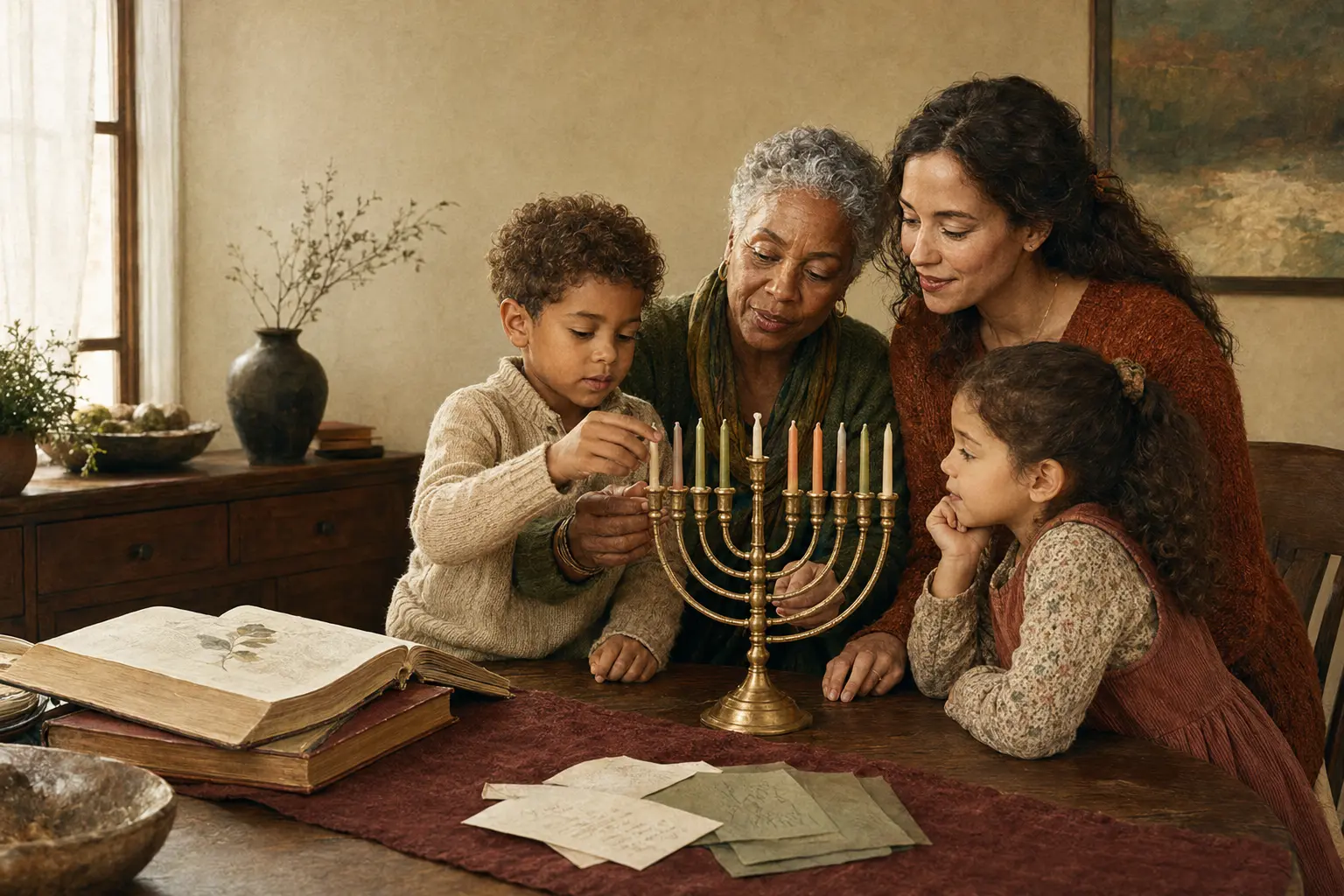
What the object tells you
A Hanukkah menorah, often called a hanukkiah, has space for eight nightly lights plus the shamash used to kindle them. The shamash should be visibly separate or at a different height.
Lighting order
On the first night, place one light at the far right. Add each new night’s light immediately to the left of the previous lights.
Use the separate helper light to kindle the others. Practices around when the shamash itself is lit can vary.
Two blessings are commonly said before lighting. Add Shehecheyanu on the first night.
Light from left to right, beginning with the light added for the current night.
Source note: Lighting order follows Reform Judaism’s Hanukkah blessing guide. For halachic detail and local timing, consult your community or rabbi.
Eight lights share one level. The shamash is visibly separate or raised.
Blessings
Transliteration and pronunciation vary. These short summaries are orientation, not a replacement for the complete Hebrew, translation, and audio offered by established Jewish sources.
Thanks God for sanctifying us through the commandment to kindle the Hanukkah lights.
Thanks God for performing miracles for our ancestors in those days, at this season.
Expresses gratitude for being sustained and reaching this season.
Shared holiday, varied practice
Some people light one hanukkiah per household, while others have each household member light. Placement and timing also vary.
When Hanukkah overlaps Shabbat, the order and timing of lighting changes. Use a local calendar and community guidance rather than a generic clock time.
Latkes are one tradition, not the whole culinary story. Sufganiyot, bimuelos, sfenj, dairy foods, and different melodies reflect varied communities.
Gifts are not an obligation. Gelt, learning, shared time, and tzedakah can all shape a family’s approach.