First-time guests
Explain terms briefly, provide transliteration, and never quiz someone on what they know.
Gather without overproducing
Design the evening around one meaningful center: lighting together, cooking, a game, storytelling, or giving. Everything else should make that moment easier.
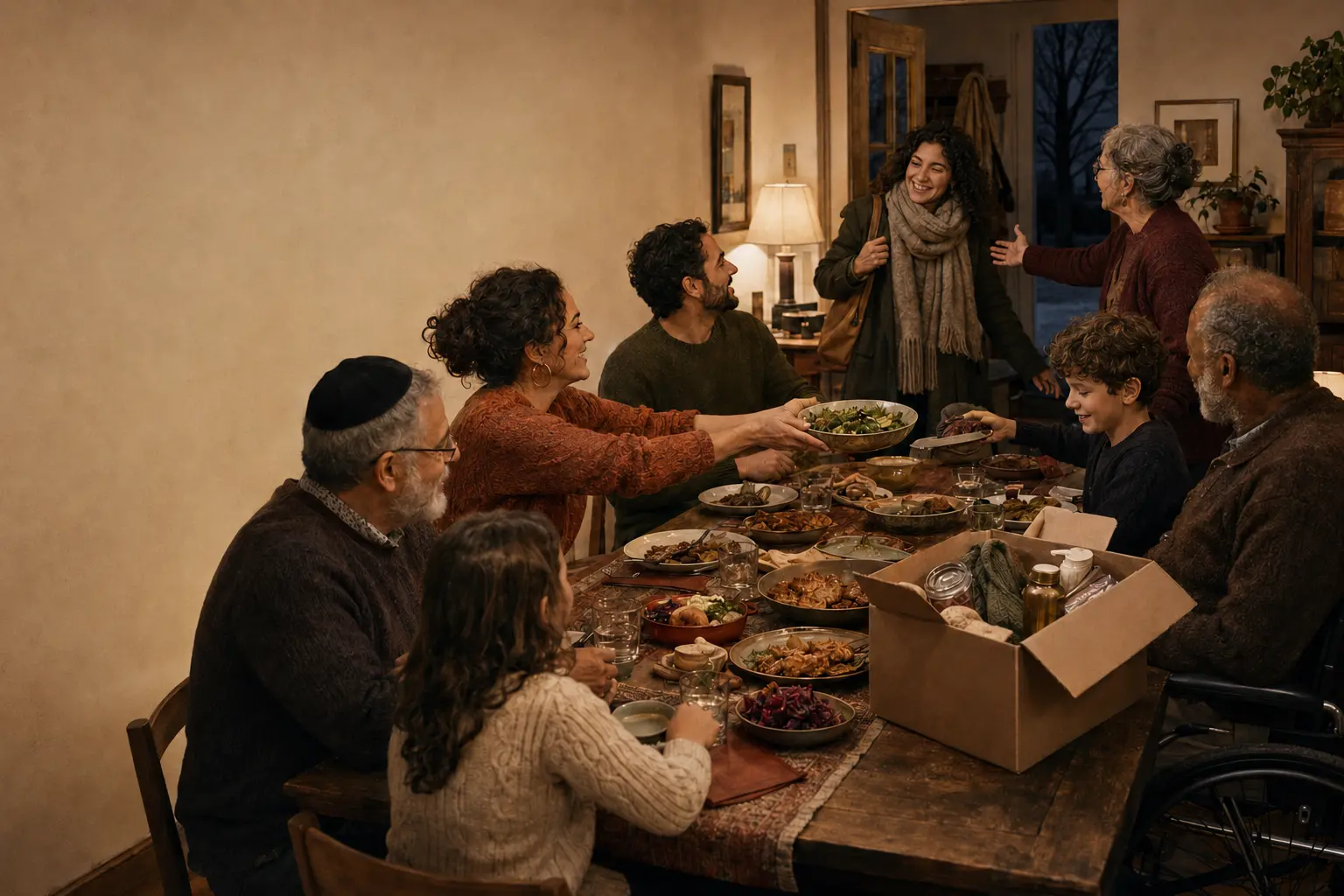
A simple hosting promise
Ask about food, mobility, sensory, and timing needs before you finalize the plan. A thoughtful gathering does not need matching decorations or an elaborate menu.
The 48-hour plan
Ask about allergies, access, transportation, children’s routines, and whether guests want a role in lighting or blessings.
Make sauces, chop vegetables, arrange seating, gather ritual items, label serving tools, and clear a safe lighting surface.
Create a place for coats, finish the table, place drinks away from the lighting area, and decide what can be skipped if time runs short.
Offer food or a drink, point out restrooms and quiet space, then explain the evening’s shape in one sentence.
Offer blessings, transliteration, or a listening role. Make participation possible without making it compulsory.
Copyable invitation
Join us for a relaxed Hanukkah evening on [date] at [time]. We’ll light together, share [dinner/dessert], and [play a game/work on a giving project]. Come as you are. Please tell us about any food, access, or sensory needs that would make the gathering easier to enjoy.
Explain terms briefly, provide transliteration, and never quiz someone on what they know.
Ask how the household names and combines its traditions. Do not assume one approach fits every family.
Keep lighting closely supervised, offer a job away from flame, and plan one activity that can end early.
Keep paths clear, offer seating with backs, label foods, lower background sound, and describe the evening’s sequence.